Lakefront Roofs: What's Different at Torch Lake
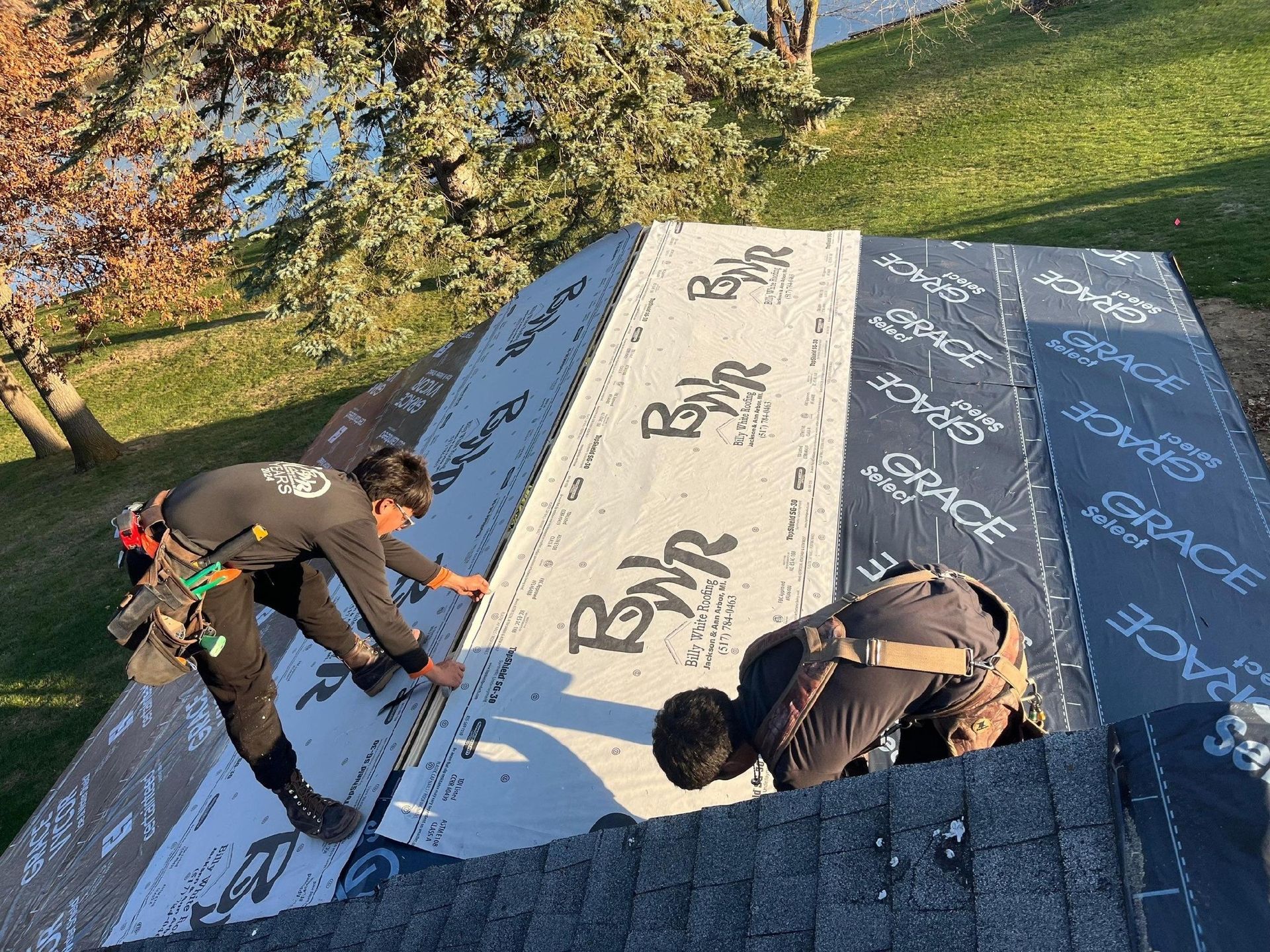
The Chain of Lakes — Torch, Clam, Bellaire, Intermediate — is one of the most beautiful stretches in Michigan, and one of the toughest on a roof. Houses are usually closer to open water, more exposed to wind, and see far more UV than an equivalent home in Jackson. We spec lakefront jobs differently because of it.
Wind Off the Lake
Standard 110-mph wind-rated shingles work for inland Michigan. Lakefront we go to 130-mph rating as a baseline. The difference is the nailing pattern (six nails instead of four) and the bond strength on the self-seal strip. The marginal cost is about 8% of the shingle line item. The marginal claim risk reduction is much, much higher.
UV and Reflected Light
Sun reflecting off open water can double the UV exposure on the lake-facing slope. Standard asphalt fades and cracks faster up here. Two protective moves: use shingles with a higher granule density (Landmark Pro vs. Landmark), and run an extra layer of ice-and-water along the lake-facing eave.
Materials We Spec Differently Up Here
Three changes from our default Jackson/Ann Arbor spec:
- Standing seam metal on the boathouse and any low-slope sections. Asphalt at low slope has a shorter life in this microclimate.
- Copper or stainless flashings instead of galvanized. Higher humidity off the lake corrodes galvanized faster.
- Ridge ventilation with built-in baffles. Without baffles, wind-driven rain off the lake can push moisture into the attic. Baffles solve it.
If you have a Chain of Lakes property, ask about our "lakefront spec" upgrade. It's about 10–12% more than our standard inland package and adds 8–10 years to expected roof life in this environment.